
Everyone, calm down! Benzodiazepine history
In the mid-20th century, barbiturates dominated the treatment of anxiety, insomnia, and related CNS disorders. They were commercialized as anxiolytics largely because few alternatives existed, and they produced reliable sedative effects. However, their mechanism of action came with serious liabilities: a narrow therapeutic window, strong respiratory depression, rapid tolerance, physical dependence, and a high risk of fatal overdose. These limitations led to widespread misuse and numerous high-profile deaths, highlighting the urgent need for safer anxiolytic medications.
Against this backdrop, Leo Sternbach, a chemist at Hoffmann-La Roche, was tasked with exploring new chemical scaffolds for CNS activity. His work initially focused on a quinazoline-3-oxide–based scaffold, which was considered promising but synthetically challenging. Sternbach aimed to generate a compound array by decorating a halo-substituted core through reactions with multiple amines, an early attempt at systematic SAR exploration. In practice, however, the chemistry proved difficult and unproductive, and the program was eventually set aside.
In the late 1950s, Sternbach revisited one of these previously synthesized and shelved compounds, originally dismissed as pharmacologically uninteresting. When re-evaluated in animal models, the molecule showed unexpected calming effects. Crucially, the compound was not acting as a quinazoline at all; it had rearranged into an entirely different scaffold. This unforeseen outcome revealed a new pharmacological class: the benzodiazepines. The discovery, part serendipity, part chemical insight, led first to chlordiazepoxide (Librium) and shortly thereafter to diazepam (Valium).
Valium proved transformative. It delivered anxiolytic, muscle-relaxant, anticonvulsant, and sedative effects with a much wider safety margin than barbiturates, rapidly reshaping psychiatric and neurological treatment. Commercially, Valium became the first true blockbuster drug, generating over $1 billion in annual revenues at its peak in the 1970s, and for years, it was the most prescribed drug in the world. Its success marked a turning point in pharmaceutical history, demonstrating the therapeutic and commercial power of safer CNS drugs.
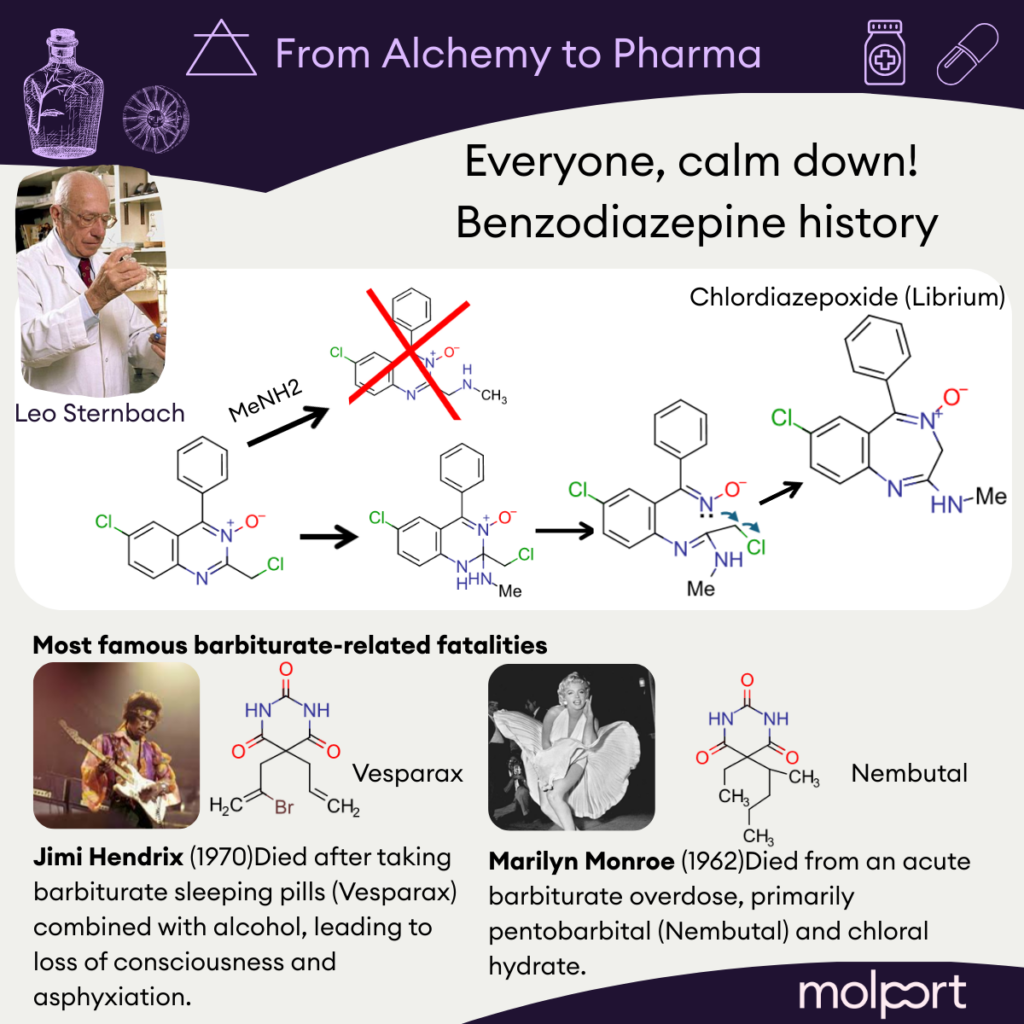
However, Valium’s widespread use also revealed new challenges. Long-term prescribing exposed issues of tolerance, dependence, and withdrawal, leading to growing concerns about overuse. As a result, benzodiazepines, including Valium, became increasingly regulated and restricted, with tighter prescribing guidelines introduced worldwide. Despite these limitations, Sternbach’s discovery permanently shifted the field away from barbiturates and established benzodiazepines as a foundational class in modern psychopharmacology, illustrating how chemical creativity, synthetic constraints, and openness to unexpected results can redefine both medicine and the pharmaceutical industry.
#PharmaHistory #DrugDiscovery #molport #Hoffmann-La Roche
Other Molport Chronicles posts- from Alchemy to Pharma:
- Eli Lilly: From Civil War Roots to Global Pharma Leader
- Toxicology and Preclinical Testing (Animal Models)
- Dose Makes The Poison
- Oldest Pharmacy
- From Apothecary to Alkaloid Pioneer: The Origins of Merck and Modern Drug Discovery
- GSK legacy shaped by Beecham’s Pills and Research Laboratories
- The journey of ASPIRIN
- The footprint of Bristol-Myers Squibb (BMS)
- BASF: From dyes to drugs